
Canadian Thanksgiving: A Tradition I Learned to Celebrate
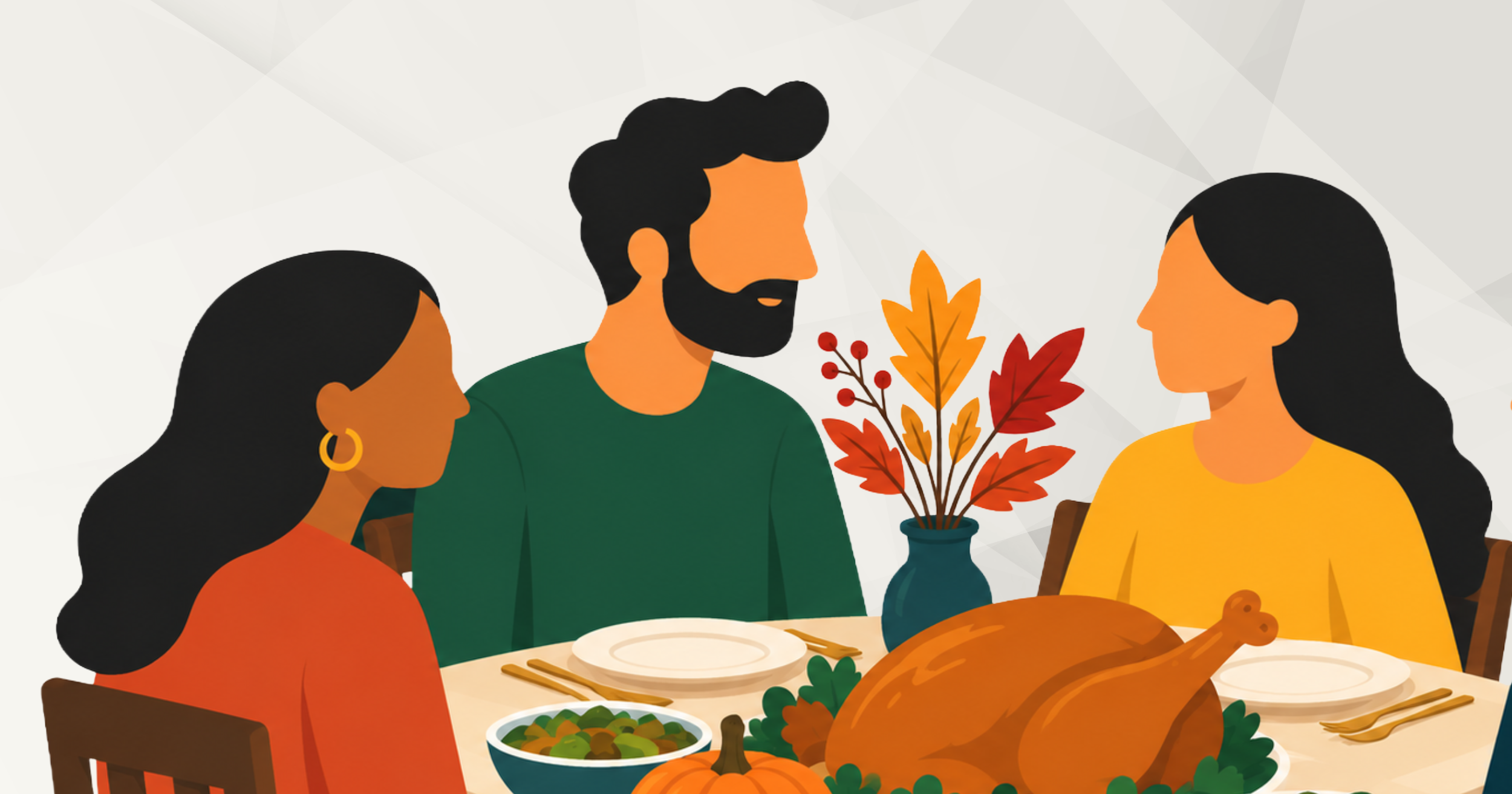
Thanksgiving isn't traditionally celebrated in most of Latin America.
When I arrived in Canada in 2012, Thanksgiving was a completely new tradition for me. My only connection to the holiday was what I'd learned from watching movies and TV shows (including that Friends episode where Monica wears a turkey on her head!).
And to be honest, at first I didn't understand why it was celebrated on a different date than in the United States. I had no idea Canadian Thanksgiving was its own thing!
Over the years, I’ve adopted this celebration. But I still find that when talking with other immigrants, some aren’t even aware that a long weekend is coming up because they simply don’t celebrate the holiday.
That’s why I decided to give this holiday a little space: for those who don’t celebrate it, those who have just arrived in Canada, or simply anyone who is curious about what it’s all about.
A little history
Long before Europeans arrived in what is now Canada, Indigenous peoples had their own traditions of giving thanks for the land and the food it provided. These traditions varied between communities. For example, the Haudenosaunee, a confederacy of Indigenous nations whose traditional territories include parts of what are now Ontario, Quebec and New York State, held ceremonies connected to planting and harvesting corn. On the Pacific Coast, some First Nations held ceremonies to welcome the annual salmon runs.
With European colonization came the displacement of Indigenous peoples and the suppression of many cultural traditions. As someone from Mexico, I can't help but see parallels with the history of Indigenous communities in my own country. At the same time, many Indigenous traditions have survived and continue to be practised today.
The Canadian Thanksgiving we know today developed much later, influenced by European religious and harvest celebrations, as well as traditions brought by settlers from the United States. Its history is also part of a much larger story of colonization and cultural change.
What is Canadian Thanksgiving?
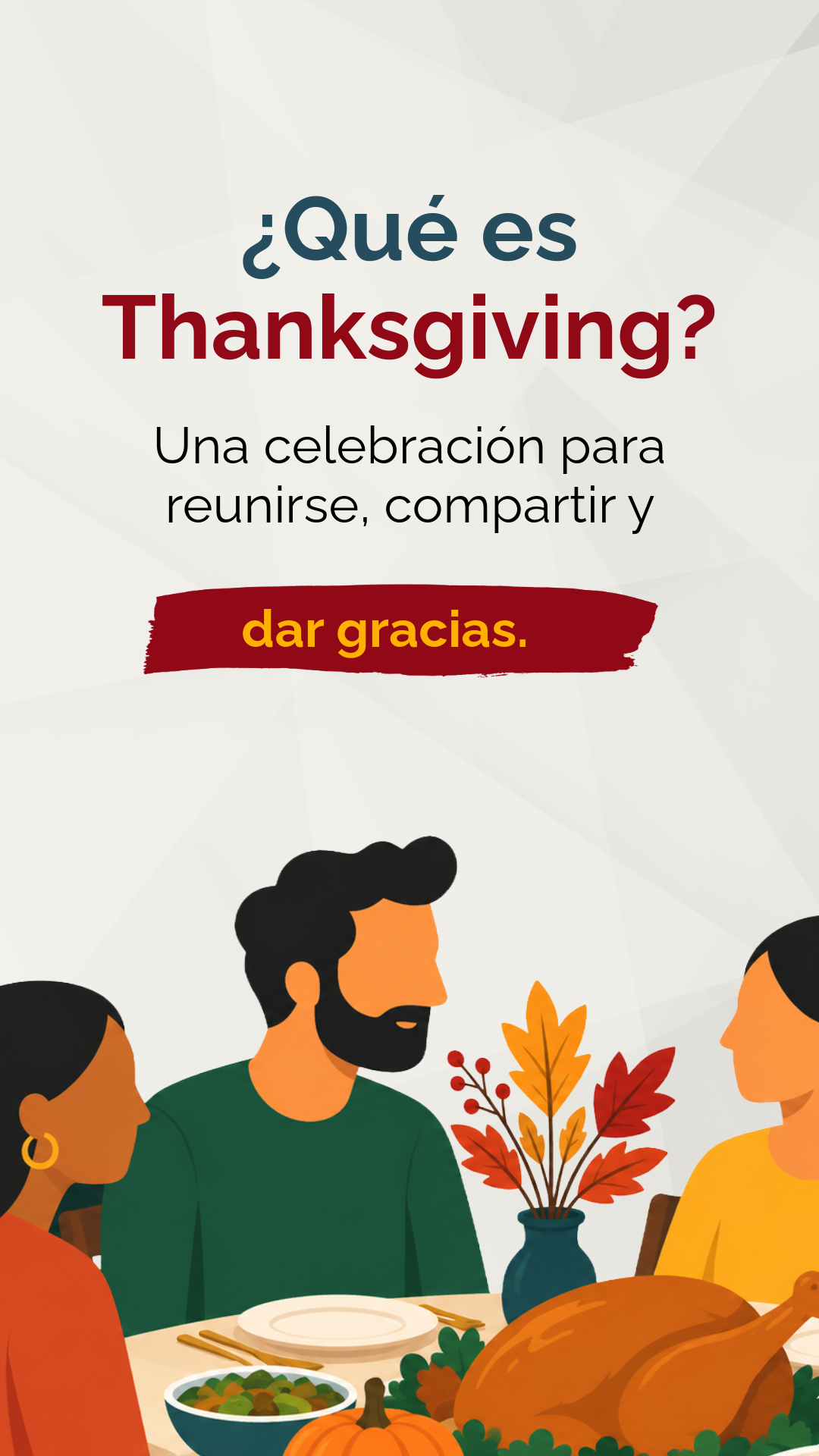
Today, Canadian Thanksgiving is a holiday centred around giving thanks, getting together with family or friends, and sharing a meal. For many people, it’s more of a cultural and family celebration than a religious one.
When is it celebrated, and why is it earlier than in the United States?
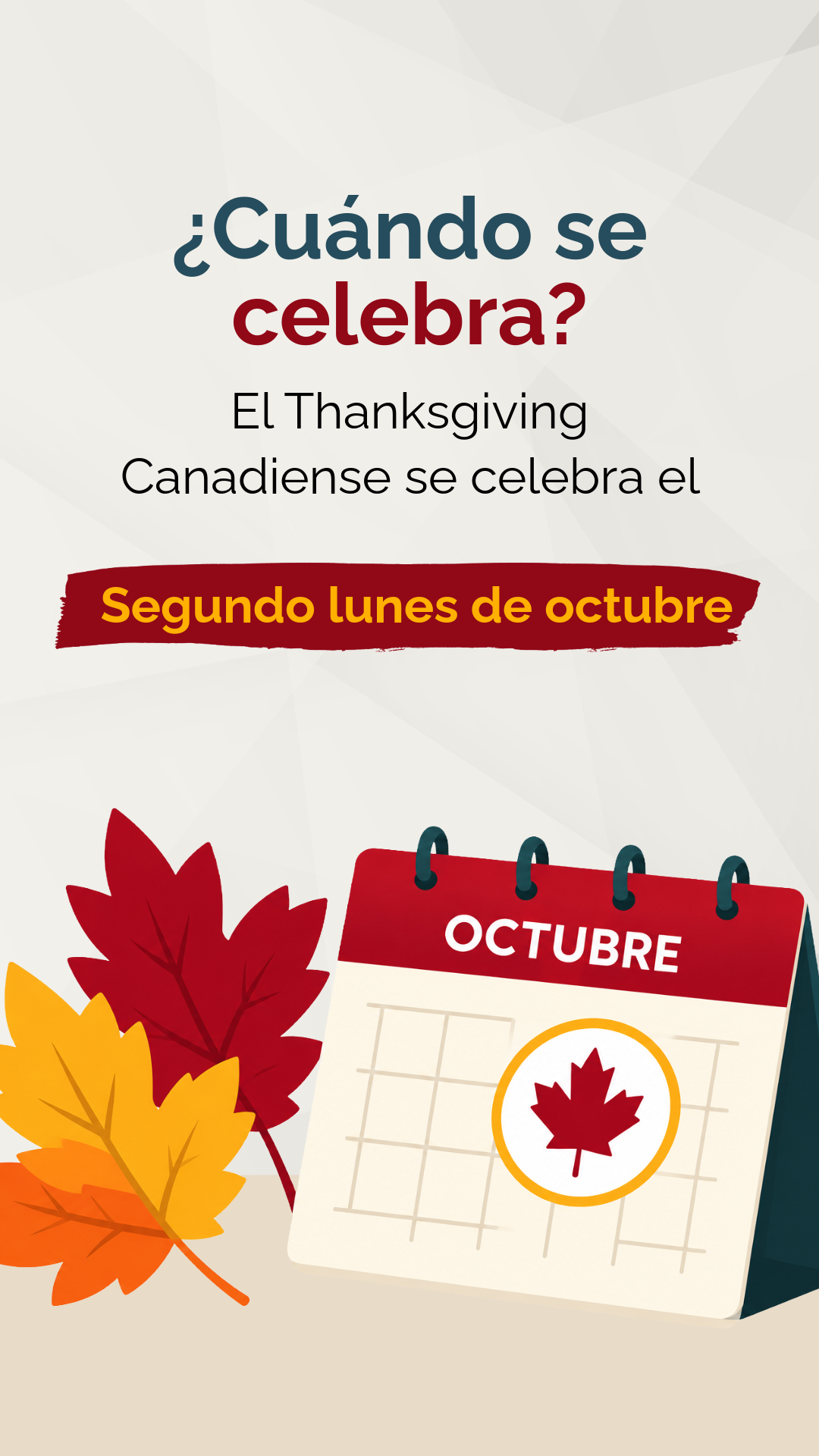
Canadian Thanksgiving is celebrated on the second Monday of October.
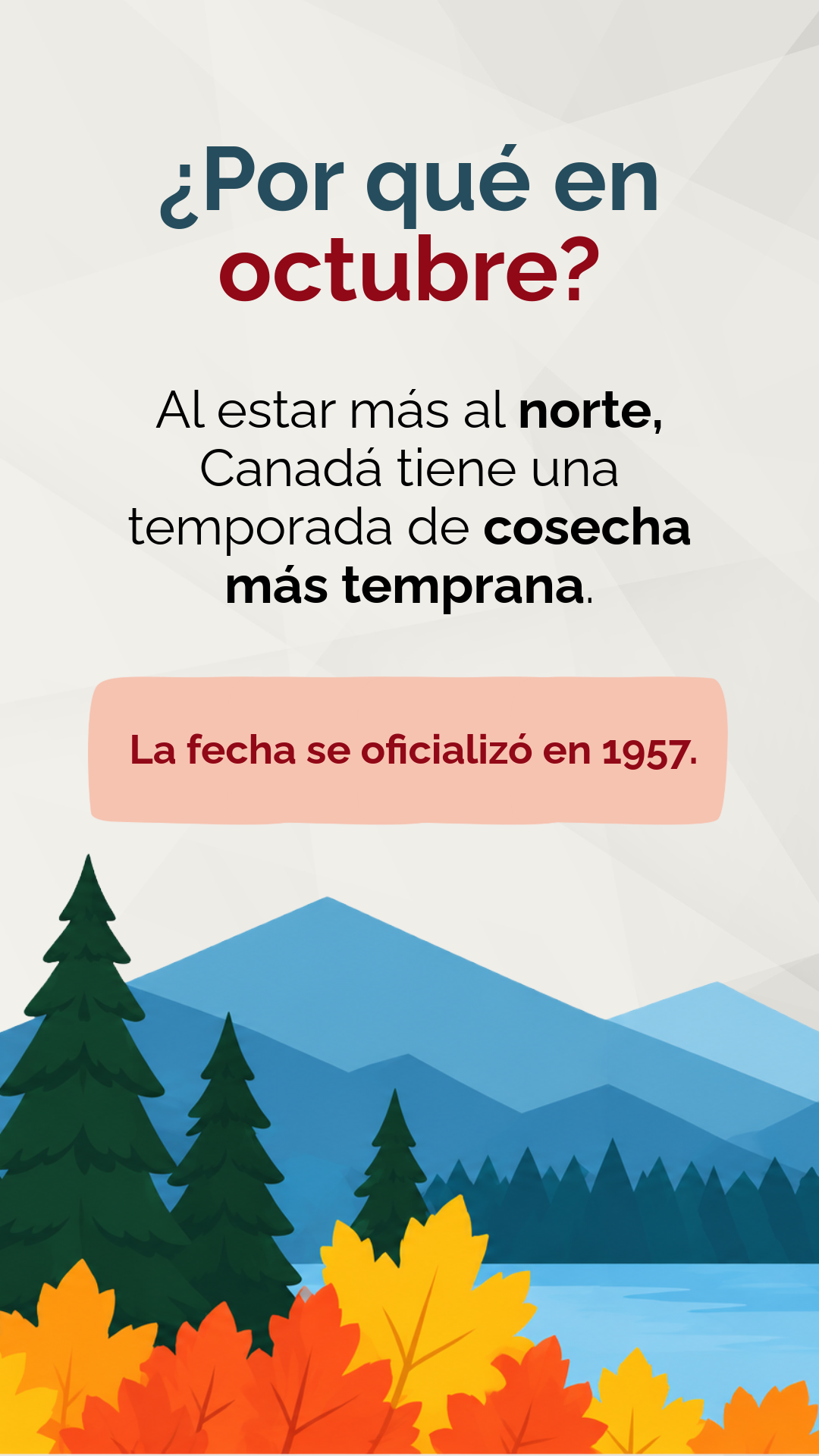
One reason has to do with the harvest season. Because Canada is farther north, the harvest traditionally happens earlier than in much of the United States.
In 1957, the Canadian government officially established the second Monday of October as the date for Thanksgiving.
How is it celebrated?
For many families, Thanksgiving simply means getting together, sharing a meal, visiting family, and enjoying the long weekend. There isn’t one single tradition that absolutely everyone follows.
And what’s for dinner?
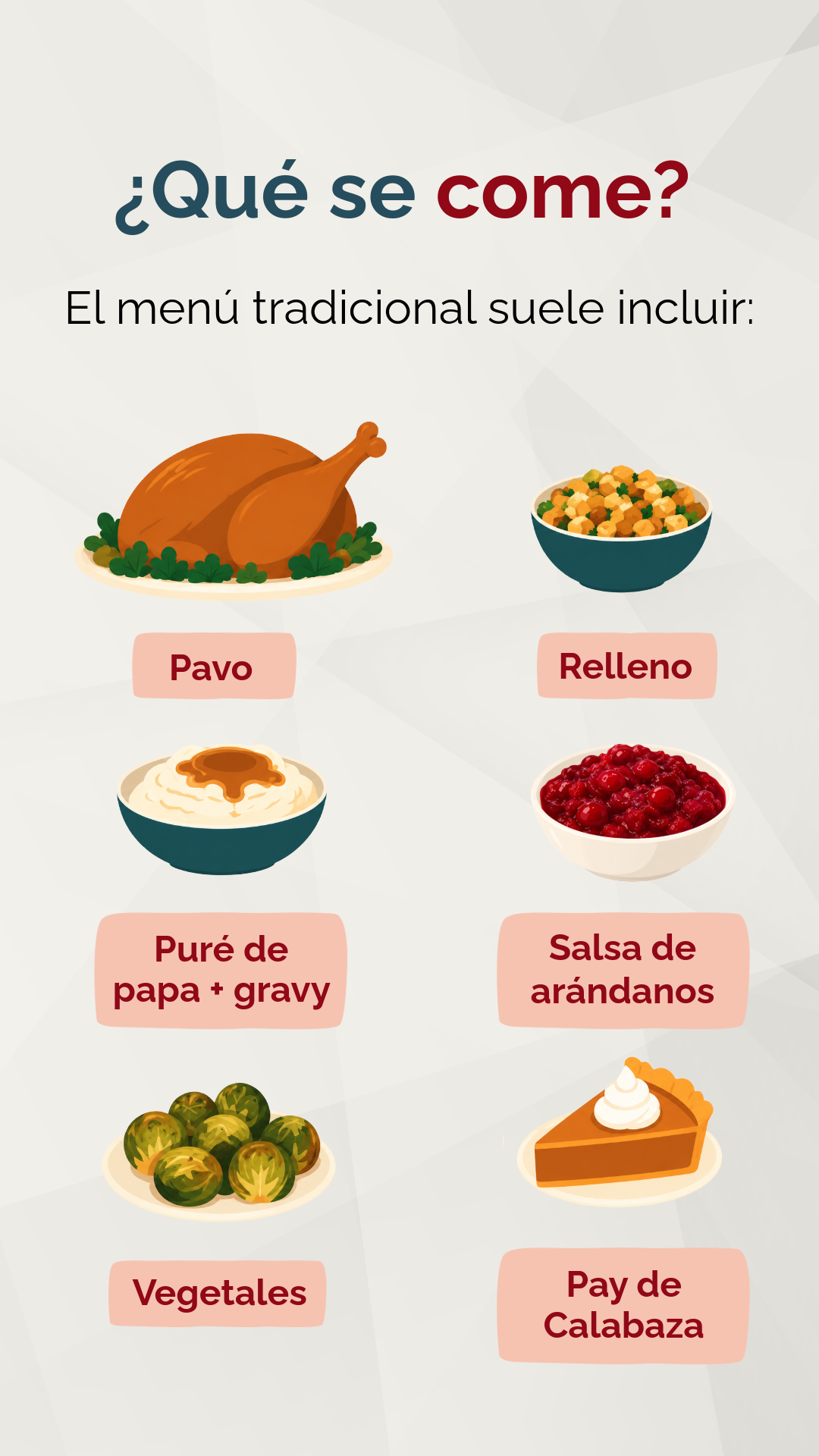
A traditional Thanksgiving dinner usually includes turkey, stuffing, mashed potatoes with gravy, cranberry sauce, vegetables and, of course, pumpkin pie.
Brussels sprouts are also a common vegetable on the table. They're not particularly common in Mexico, and over the years of celebrating Thanksgiving, I've discovered that boiling them is practically a crime!
Does everyone celebrate it?
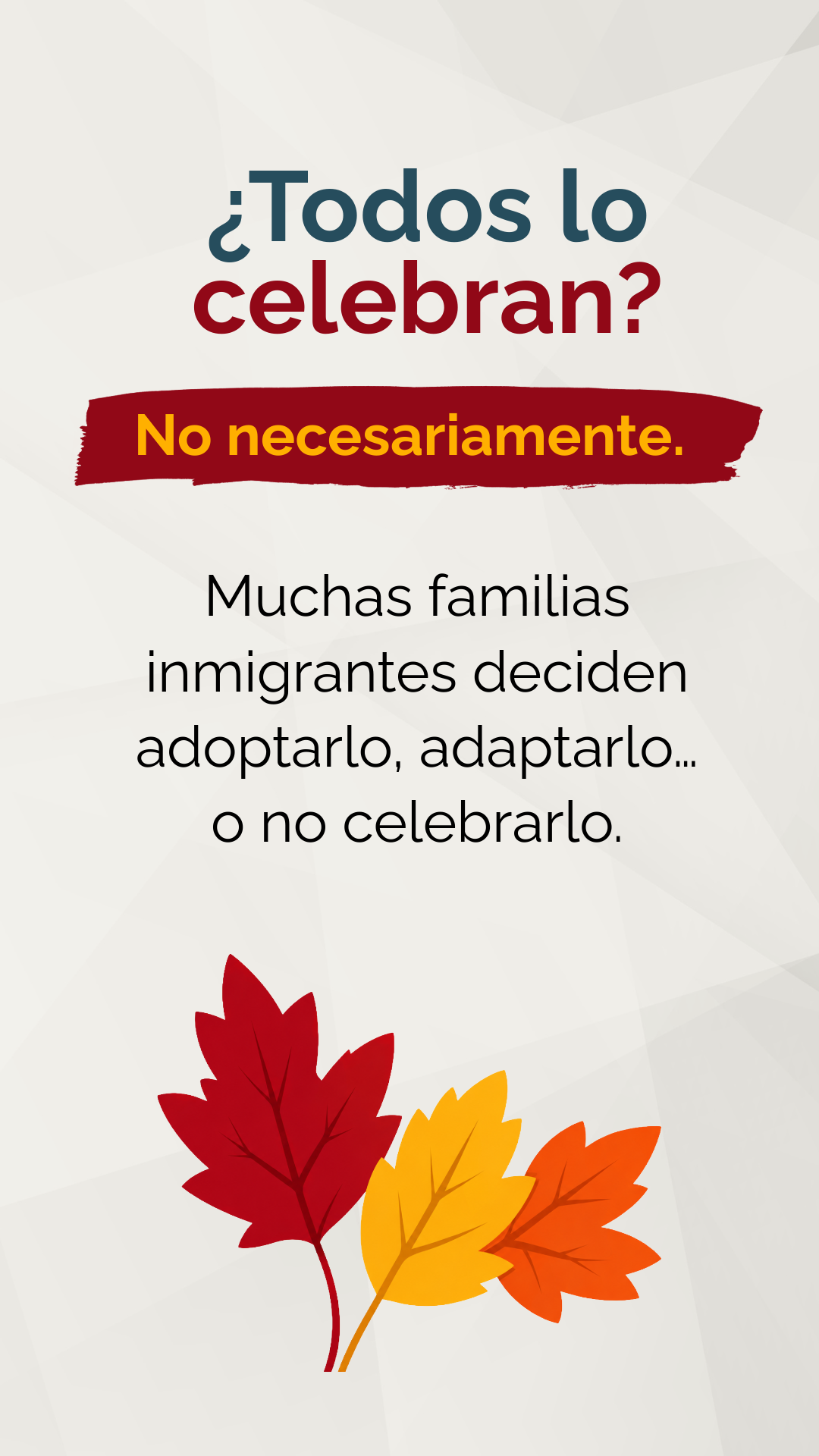
Not necessarily.
Not everyone living in Canada grew up celebrating Thanksgiving. For many immigrant families, it’s a new tradition. Some choose to adopt it, others adapt it to their own customs, and others simply don’t celebrate it.
What about Thanksgiving in Mexico?
I can only speak from my experience as a Mexican, but interestingly, Thanksgiving has also started to become more common in some parts of Mexico.
In my hometown of Mazatlán, Sinaloa, in northwestern Mexico, which is a popular destination for Canadian and American snowbirds, I’ve noticed restaurants and businesses embracing the celebration to cater to visitors. Some local families with connections to the United States have also started celebrating it. And really, an extra holiday is just another reason to get together and celebrate!
When Thanksgiving is celebrated there, it often includes the familiar traditional dishes, such as turkey, stuffing, mashed potatoes, cranberry sauce and pumpkin pie.
I’m actually quite interested in seeing how this holiday develops in my hometown over time because I think it’s an excellent example of how traditions can cross borders and become part of a culture that didn’t originally celebrate them.
Making Thanksgiving our own
Over the years, I’ve celebrated Thanksgiving in different ways.
My first Thanksgiving in Canada looked very different from the one I celebrate today. That year, a group of us newcomers from different parts of the world got together and ordered pizza. There was no turkey, stuffing, or pumpkin pie. The idea was simply to celebrate being together in a new country.
Today, my family is Mexican-Canadian, and for the past 11 years, I’ve been fortunate to be immersed in this celebration and learn all those traditions that were once completely new to me.
And I think that’s one of the beautiful things about living between cultures. Adopting a new tradition doesn’t mean leaving our own behind. We can hold on to what we bring with us while also making room for new customs, new flavours, and new ways of celebrating.
So this Thanksgiving, whether you celebrate with turkey and the whole traditional dinner, get together with friends over pizza, or simply enjoy the long weekend, I hope you find something to be thankful for and someone to share it with.
Want more stories like this?
If you’d like to receive more articles like this and stay connected to what’s happening in the Latin community on Vancouver Island and beyond, join the SOMOS newsletter.
Sources & Further Reading
Haudenosaunee Confederacy — Ceremonies
Indigenous ceremonies connected to planting, harvest and giving thanks.Oneida Nation — Ceremonies
Traditional ceremonies and the continued practice of giving thanks.KnowBC — Indian Fishing: Spiritual Realms
Historical accounts of First Salmon ceremonies among Pacific Coast First Nations.Canada's History — The History of Thanksgiving in Canada
The history of Canadian Thanksgiving, its European influences and the establishment of its official date.Government of Canada — First Nations in Canada
Historical background on First Nations and the effects of European colonization.

About the Author
Ana Miller is a Mexican-Canadian brand and visual designer, cultural storyteller, and founder of SOMOS. Originally from Mexico and now based on Vancouver Island, she uses her creative background to explore and celebrate Latin American culture, traditions, identity, and belonging.